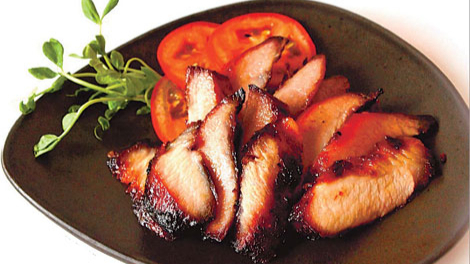
Char Siu
Introduction
Char Siu, also known as Chinese barbecued pork, is a popular dish in Cantonese cuisine. Characterized by its savory, sweet, and slightly smoky flavor, Char Siu is a type of Siu Mei, a category of roasted meats that holds a prominent place in Hong Kong's culinary scene. Traditionally, the dish is made by marinating strips of pork in a mixture of honey, five-spice powder, fermented tofu, dark soy sauce, hoisin sauce, and Shaoxing wine, before roasting it to perfection. The result is a tender and succulent piece of meat with a caramelized, glossy exterior that is often served with rice or noodles. As a staple in Cantonese restaurants worldwide, Char Siu has become synonymous with both authenticity and comfort in Chinese cuisine.
History
The origins of Char Siu can be traced back to ancient China. The term "Char Siu" literally means "fork roast", describing the traditional method of cooking wherein seasoned strips of pork were skewered with long forks and roasted over open flames. This technique preserved the meat while enhancing its flavors, making it a favorite among travelers and merchants. Over the centuries, as the Cantonese people migrated and settled in various parts of the world, they carried their culinary traditions with them, including the beloved Char Siu. The dish has evolved over time, adapting to the ingredients available in different regions while maintaining its quintessential flavors. It became particularly popular in regions with significant Chinese diaspora, such as Southeast Asia and Western countries, where it is frequently found in Chinese restaurants and takeaways.
Preparation
Ingredients
The preparation of Char Siu involves a careful selection of ingredients that balance the dish's sweet and savory flavors. Key ingredients include:
-
Pork: Typically, pork shoulder or pork neck is used due to its marbled fat content, which results in tender and juicy meat.
-
Marinade: A mixture of honey, five-spice powder, soy sauce, hoisin sauce, red fermented bean curd, and Shaoxing wine comprises the marinade, providing depth and complexity to the dish.
-
Additional Flavorings: Garlic, ginger, and sesame oil are often added to enhance the aroma and flavor profile of the Char Siu.
Cooking Techniques
The traditional method of cooking Char Siu involves marinating the pork for several hours or overnight, allowing the flavors to deeply penetrate the meat. Following marination, the pork is roasted in an oven or over a charcoal grill. During the cooking process, the meat is basted with additional marinade to achieve a glossy, caramelized finish. The result is a richly flavored, aromatic dish with a distinctive red hue, which is often associated with its use of fermented bean curd or red food coloring. Modern adaptations of Char Siu may involve oven baking or grilling, allowing for variations in cooking time and temperature to cater to different preferences and equipment availability.
Variations
While the classic Char Siu calls for specific ingredients and preparation methods, numerous variations have emerged across regions and cultures. In Hong Kong Special Administrative Region, Char Siu may be served as part of a larger roast meat ensemble known as "Siu Mei", which includes other roasted meats like duck and goose. In Southeast Asia, particularly in Malaysia and Singapore, Char Siu is often part of the "Char Siu Rice" or "Char Siu Noodles" dishes, where it is served with fragrant rice or egg noodles, accompanied by pickled vegetables and a savory sauce. Additionally, innovative restaurants have experimented with different cuts of meat, alternative marinating sauces, or fusion elements, introducing new textures and flavors to the traditional Char Siu.
Cultural Significance
Char Siu holds a special place in Cantonese culture and is often associated with celebrations and communal dining. Its presence in festive meals and family gatherings symbolizes togetherness and prosperity. In Hong Kong, Char Siu is more than just a dish; it is a culinary icon that represents the city's rich heritage and vibrant food culture. The act of sharing Char Siu among family and friends is seen as a gesture of goodwill and hospitality. Moreover, the dish has permeated local slang, with phrases like "sip some tea, eat a (Char Siu) bun" capturing its integration into everyday life as a symbol of leisure and enjoyment.
Influence on Global Cuisine
The proliferation of Chinese communities around the world has greatly contributed to the global popularity of Char Siu. As Chinese immigrants settled in various countries, they introduced their culinary traditions, including Char Siu, which quickly gained favor among local populations. In Western countries, Char Siu is often featured in Chinese restaurants and takeaways, where it is enjoyed by people of diverse cultural backgrounds. The dish's distinct flavor profile and versatility have made it a favorite in fusion cuisines, inspiring chefs to incorporate elements of Char Siu into various dishes, from Western-style barbecue to Asian-inspired tacos and sandwiches. Its influence can be seen in the growing appreciation for Cantonese cuisine as a whole, as Char Siu continues to captivate palates and bridge cultural culinary gaps.








